

[slim_seo_breadcrumbs label_home=”Matakwa Safaris”]
Nature enthusiast, are you dreaming of discovering a country with rich flora? Namibia is made for you! This country, rich in landscapes and lush flora, will surely captivate you.
During your trip to Namibia, discover extraordinary fauna and flora. Namibia is a country with many facets, and the diversity of its flora varies depending on the region you visit.
Between dunes and deserts, oceans and savannahs, let yourself be carried away by a country full of wonders to discover!
The flora in the Namibia Desert
Namibia, a country known for its extraordinary sand dunes, is full of other unsuspected wonders. During your trip to Namibia, discover rich flora, breathtaking landscapes, and numerous plant species that have managed to adapt to this very arid environment.
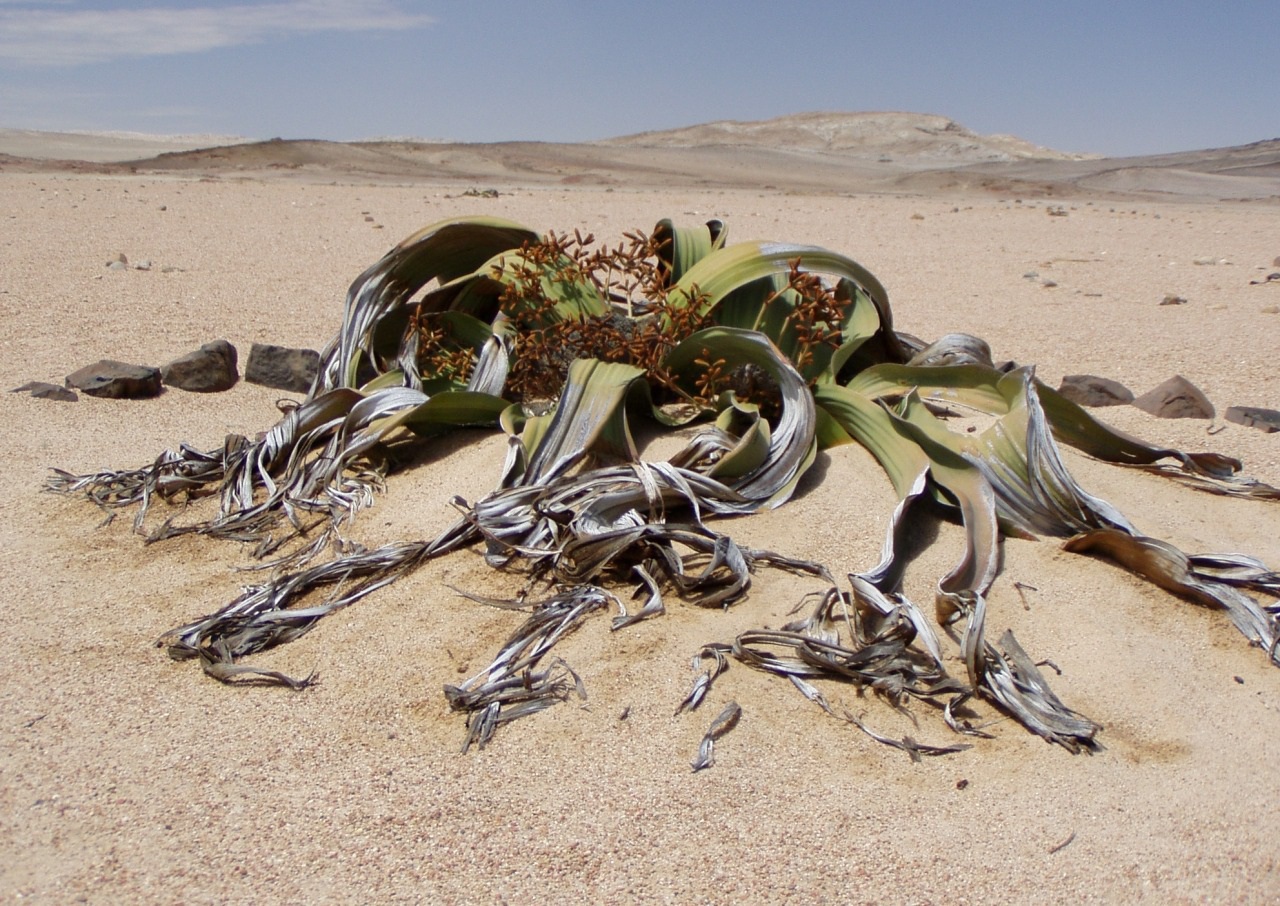
The Namib Desert is among the must-see attractions in Namibia. Its harsh temperatures, reaching around 45°C in summer, make the Namib a particularly hostile area, not conducive to the development of flora, and yet… Despite the low rainfall it receives, the Namib Desert is home to many plants, including the Welwitschia Mirabilis, a plant composed of two leaves and a stem, capable of surviving for up to 2 000 years.
The Welwitschia plant is mostly found in the unmissable region of Swakopmund. The Welwitschia Mirabilis species is an original plant species with a short trunk, topped by a disc. This plant, which captures water through its leaves, is an emblematic species of the Namib Desert region and mainly thrives there, in the heart of a particularly arid environment.
Take advantage of your trip to Namibia to discover the Namib Desert and the rich flora it harbors. This must-see location is home to several species of trees, such as the famous “Camel thorn tree”, known for its long, sharp thorns resembling those of a camel. This species is particularly well-known in Southern Africa and can sometimes reach depths of up to 60 meters under the sand. This tree has the unique ability to draw water from underground during very dry periods. It adapts to survive intense episodes of heat or frost.
Near Sossusvlei, another must-see in Namibia, you can also admire another species of plants: the Nara melons. These iconic yellow fruits of the country, and more specifically of the region, have, like the Camel thorn tree, an impressive system that allows them to reach depths of up to 40 meters to find water.
The flora in the Kalahari Desert
During your journey in Namibia, do not miss the Kalahari Desert, renowned for its rich flora. To experience breathtaking landscapes and dense vegetation, the Kalahari Desert is a must-visit destination. Less arid than the Namib Desert, this region harbors numerous plant species. In the Kalahari Desert, Namibia, you will be pleasantly surprised by the variety of flora and its remarkable density. The area is predominantly composed of savanna. Following the rainy season, you can admire nearly 400 plant species flourishing in the Kalahari Desert. This essential region of Namibia boasts abundant vegetation, characterized by wooded areas and numerous resilient trees, such as acacias, which are particularly prominent in the Kalahari Desert.
The flora in other regions of Namibia
During your trip to the country, you will be surprised to notice that the flora evolves depending on the regions of Namibia you visit. In the northern region of Namibia, you will discover a very arid climate, which leaves little room for fauna and flora. The aloe, a very resistant plant, is the only one to survive there. This tree can reach up to 9 meters high and provides nesting opportunities for birds.
In the northeast of the country, the fauna is denser due to the more abundant rains. Leafy Mopanes (or Mopanis) are very common trees in this part of Namibia. They are known to reach heights of up to 25 meters. This tree of Southern Africa belongs to the legume family.
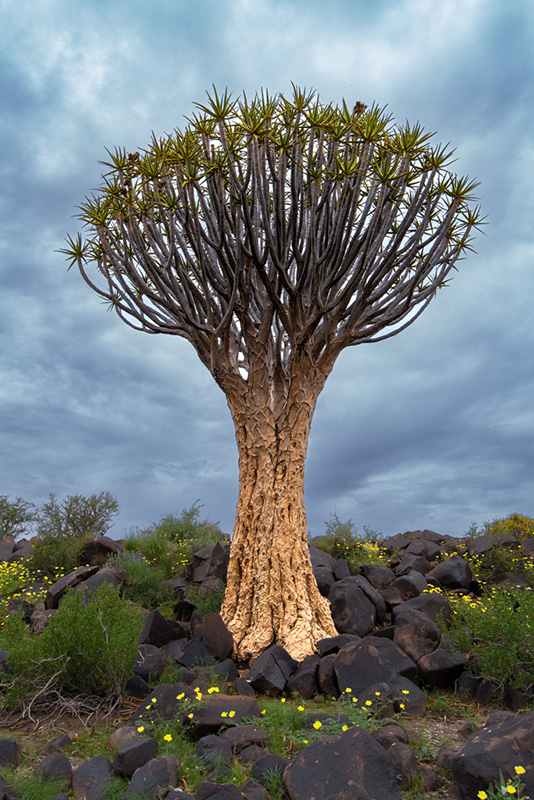
In the southwest of Namibia, an emblematic species thrives: the quiver tree. The quiver tree, also known as the “false tree,” is aloe very common in Namibia. This iconic tree of the country grows very slowly on rocky soils. It gets its name from the fact that indigenous people use its leaves to make quivers.
In Namibia, plants can either kill or heal. Many plant species are toxic, and the Bushmen use them to make weapons with poisoned tips.
The savannah, an integral part of Namibia
The country is enriched by the numerous assets that define it. During your travels, you will be delighted to wander through the dunes, deserts, and parks showcasing astonishing diversity. The authentic charm of this land lies in its diverse and varied flora. Indeed, the country offers more than just its seemingly endless dunes! A journey through Namibia will leave you awestruck by the multitude of landscapes and the prominent savanna. The flora of Namibia is influenced by the climate and geographical zone to which it belongs. The desert and forests host vastly different species of trees and plants. Namibia boasts an extensive array of flora, spanning dunes, deserts, and oceans, yet the savanna alone accounts for 70% of the country’s vegetation. This savanna is abundant in grasses and thorny thickets. It stretches over more than half of the territory, representing a notably arid flora, where water is scarce. The soils, severely lacking in moisture, support resilient plant species such as acacias and quiver trees. Namibia’s rich flora has developed in response to seasonal changes and will therefore vary depending on the timing of your visit. In summer, temperatures soar, while the nights remain mild and pleasant. However, in winter, nights can be frigid, sometimes dipping below 0°C, while the days are more temperate. Throughout your journey in this remarkable country, you will have the opportunity to observe this lush flora, which has thrived in Namibia by adapting to the challenging conditions that characterize these arid lands.