

[slim_seo_breadcrumbs label_home=”Matakwa Safaris”]
“Adventure enthusiasts and lovers of vast open spaces, embark on a journey to discover one of the most beautiful countries in Africa”
Cape Cross and the fur seals
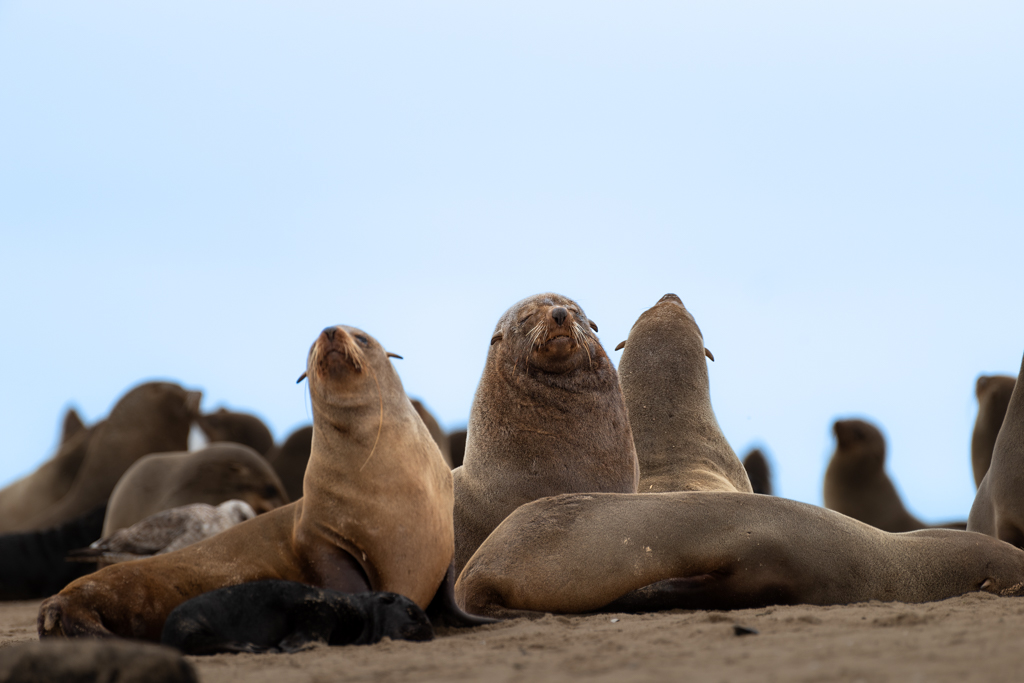
Cape Cross is a must-visit on your trip to Namibia. This natural park was discovered in 1486 by the Portuguese navigator Diogo Cão. He erected a cross there to mark the southernmost point ever reached before him.
This park, located on the Skeleton Coast, is home to the most impressive seal colony in Namibia. This sanctuary for fur seals hosts over a hundred thousand seals, which you can come and admire. Cape Cross also houses several shipwrecks stranded on the beaches.
“Be amazed by the many parks that Namibia hosts, their diversity, and richness.”
Okonjima Nature Reserve
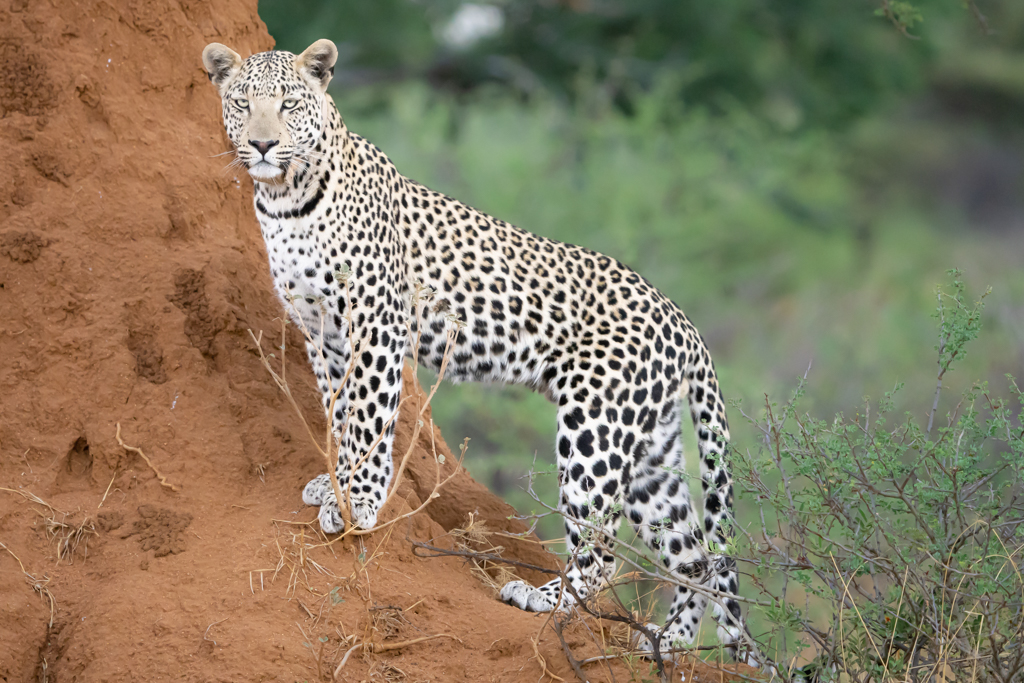
Okonjima Nature Reserve is renowned for its frequent sightings of leopards, brown hyenas, and pangolins during safaris, as well as for the AfriCat Foundation. Since its establishment in 1991, AfriCat’s mission has been to make significant contributions to conservation while striving to ensure the survival of Namibia’s predators in their natural habitat. The Foundation undertakes research and environmental education projects.
Okonjima Lodge offers a diverse range of accommodations, from well-appointed private campsites to breathtaking safari lodges. The award-winning Okonjima African Villa and the exclusive Bush Suite provide an unparalleled luxury safari experience, complete with a private chef, a personal guide, and a dedicated safari vehicle. Okonjima ensures a memorable and distinctive African safari adventure.
Erindi Nature Reserve
Welcome to the premier ecotourism destination in Southern Africa!
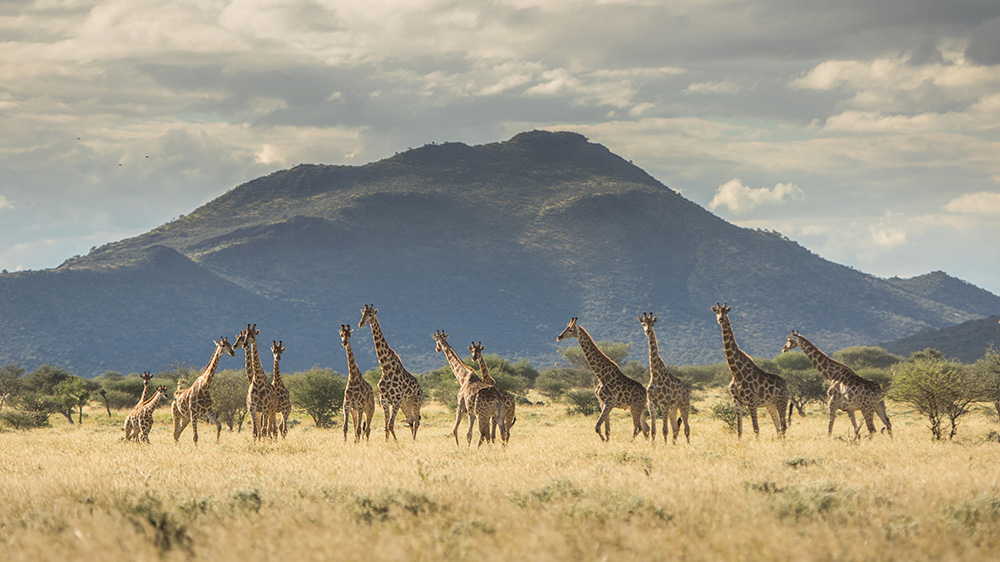
Erindi Private Game Reserve is a protected reserve in central Namibia. Erindi, which means “place of water,” is a sustainable natural wonderland. We are custodians of the most prolific amount of endemic species and multiple conservation projects. With 70,719 hectares of pristine nature under our care, we have undertaken a massive task to pursue conservation initiatives on behalf of environmentally friendly tourism, while empowering our local communities.
Today, Erindi is an idyllic retreat with a rich cultural heritage, knowledgeable guides, and unmatched hospitality – ensuring visitors the kind of safari that lives in memory for a lifetime.
The Caprivi Strip: Green Heart
During a safari in Namibia, you’ll be surprised by the contrast between the Caprivi Strip and the rest of the country. The Caprivi Strip is a very humid and lush region. It’s a narrow strip that stretches for nearly 450 km from the northeastern corner of the country and is about 30 km wide. The Caprivi Strip shares its borders with Zimbabwe, Zambia, Botswana, and Angola. The region is surrounded by rivers, including the Chobe, Kwando, Linyanti, and Zambezi, and is home to the Bwabwata, Nkasa Rupara, Mudumu, and Mahango National Parks.
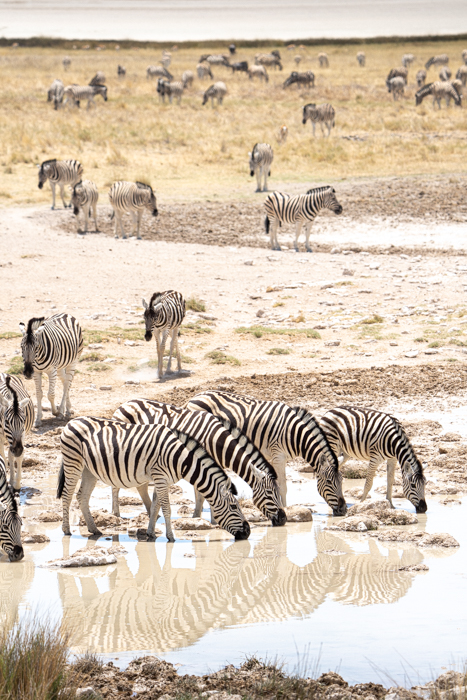
The Etosha National Park in Namibia is the third-largest park in Africa
Located 400 kilometers north of Windhoek, Etosha National Park is an essential destination in Namibia. Established in 1907, it originally served as an expansive hunting reserve encompassing 93 200 square kilometers. In 1967, it was designated as a national park, with its area reduced to 22,935 square kilometers, of which only one third is accessible to the public.
“Etosha is known for its vast salt pan, which is visible from space.”
The uniqueness of Etosha National Park lies in its hosting of a large dried-up lake, the Etosha Pan. With an area of over 4,800 km², its 130 km long and 50 km wide dimensions make it the largest salt pan in Africa, visible from space.
The origin of this natural “pan” dates back over 100 million years. Etosha Pan was a lake fed by the Kunene River which, due to tectonic plate movements, changed its course to flow into the Atlantic Ocean, thus drying up the lake.
Fauna and flora
Etosha National Park consists of vast semi-arid savannah, forests, and the Pan. Despite the aridity of the region, the reserve has numerous waterholes facilitating wildlife observation.
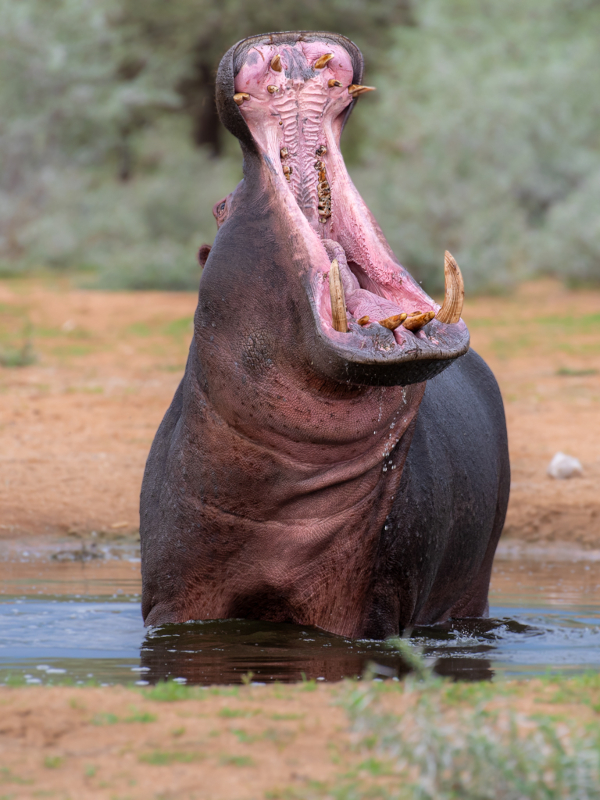
It is a natural refuge for many animals, including zebras, oryx, kudus, impalas, springboks, wildebeests, jackals, elephants, lions, leopards, giraffes, white and black rhinos, ostriches, and over 340 species of birds.
Observing the daily lives of these animals is always a moving spectacle.
114 species of mammals and 340 species of birds!
Naukluft, the largest park in Namibia.
Naukluft is the largest park in Namibia. With an area of almost 50,000 km², it is larger than Switzerland!
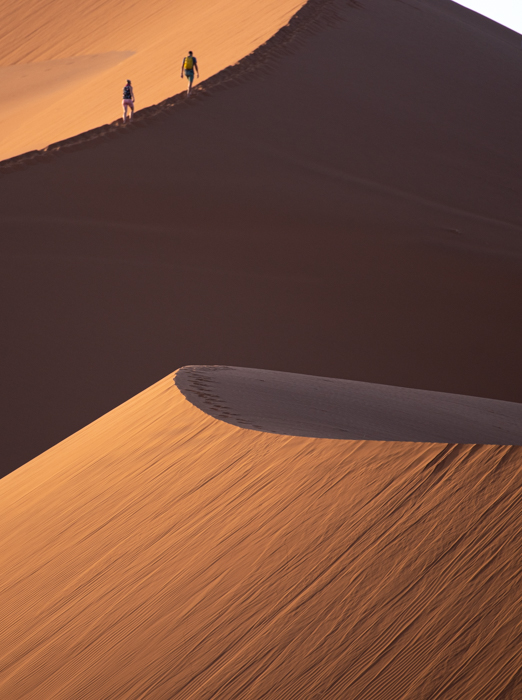
Naukluft Park is home to exceptional sites and diverse landscapes. Within this park, you’ll find the Namib Desert, famous for its tallest sand dunes in the world, isolated mountains with ochre hues, and a rich variety of flora.
Naukluft Park is an extremely arid area where animals are scarce. Only certain species, accustomed to harsh conditions, manage to survive there. These include insects, as well as snakes, hyenas, or jackals.
Sossusvlei is one of the most visited sites in Naukluft Park, in the heart of the Namib Desert. This salt and clay desert is a must-see during your stay in Namibia.
Renowned for its breathtaking landscapes, do not miss the stunning red sand dunes and the awe-inspiring sunrises.
Additionally, make sure to visit the Sesriem Canyon, located within the Naukluft Park. This canyon derives its name from the river that sculpted it. Situated halfway between Sossusvlei and Dead Valley, the white sand valley adorned with lifeless trees, Sesriem offers the opportunity to observe a variety of crawling insect species.
The Naukluft Park offers varied and breathtaking landscapes not to be missed during your stay.
The Waterberg Plateau, an essential destination
Counted among Namibia’s most beautiful locations, the Waterberg Plateau is also one of the most challenging parks to access.
The Waterberg Plateau was the site of the Battle of Waterberg, which pitted two indigenous Namibian peoples, the Herero and the Nama, against the German colonizers. The battle resulted in numerous casualties and has been termed a genocide.
This park is located in the center of the country. Standing 200 meters high, the Waterberg Plateau overlooks the Kalahari Desert. Waterberg offers sublime landscapes, especially at sunrise or sunset. Today, the park allows hiking enthusiasts to embark on numerous walking trails.
The Waterberg Plateau is home to many animal species as it is not very arid. Here you can find black antelopes, Cape vultures, as well as white rhinos. The fauna and flora are particularly rich on the Waterberg Plateau, making it a must-visit destination in the country.
The Waterberg Plateau is made up of porous layers of red sandstone, from which water seeps out to form springs all year round. Waterberg, literally meaning “water mountain”, owes its name to this phenomenon. The plateau is a surprising place, contrasting with the aridity of the surrounding desert.