

[slim_seo_breadcrumbs label_home=”Matakwa Safaris”]
At the heart of Africa, Namibia, a country rich in both fauna and flora, is full of other unsuspected wonders. During your journey in Namibia, you will be impressed by its desert, its dunes, and its breathtaking landscapes, but also by the peoples who live there. While the country is a must-see for its fascinating landscapes, it is no less so for its culture and its population.
During your safari across Namibia, meet an extraordinary population, rich in its way of life and customs. Traverse through the dunes and the desert to visit villages of still lesser-known populations. There are several peoples in Namibia, each with varying customs and traditions. The most well-known peoples of Namibia include the Ovambos, the Bushmen, and the Himbas.
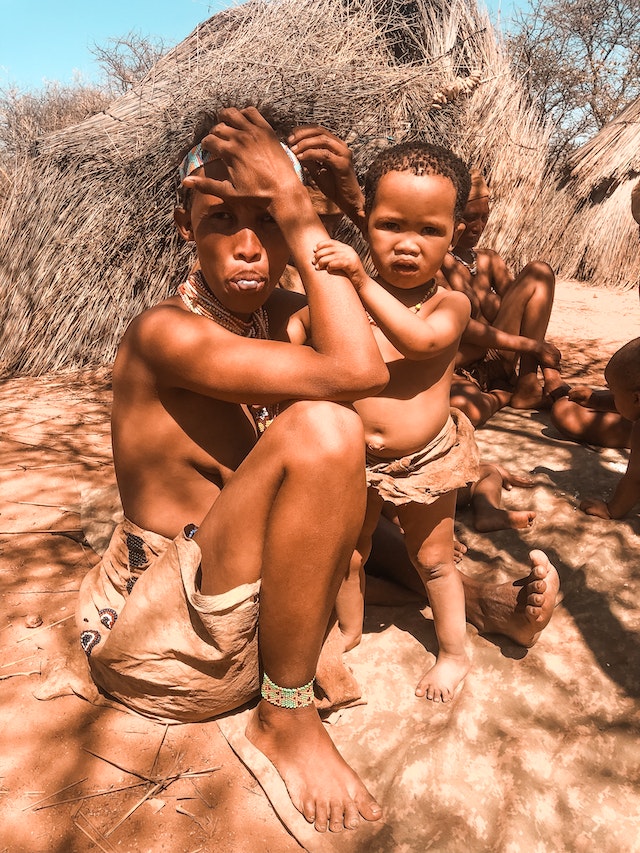
The Bushmen people, the first population of Southern Africa
The Bushmen people are the first inhabitants of Southern Africa. They have been residing in the region for 20,000 years. Rock engravings testify to their antiquity and prove that they were present long before other peoples in Namibia. Meet these iconic inhabitants of the Kalahari Desert and learn about their way of life and the richness of their customs.
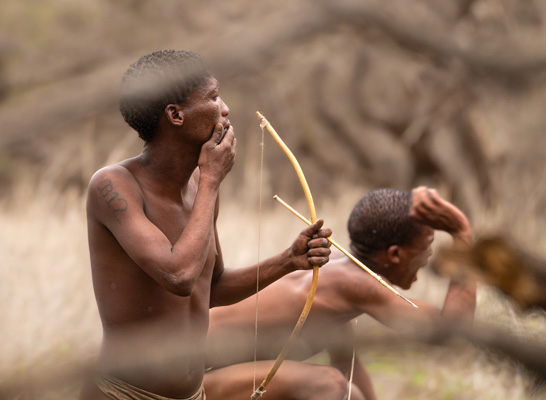
During your trip to Namibia, don’t miss the opportunity to meet this authentic and kind-hearted population. It’s in the Kalahari Desert or on the plains of Bushmanland that you can catch sight of their villages. The Bushmen mainly live off hunting and gathering in a challenging environment. Namibia is home to around 27,000 Bushmen.
“The customs and unique beauty of the Himba people are sure to charm you!”
The Himba people, emblematic of Namibia
During your trip to Africa, and more specifically to Namibia, meet the Himba people, emblematic of the country.
Formerly known as “Herero,” this population was driven from their homeland and, upon arrival in Angola, had no choice but to beg for survival. Thus, this people became the “Himba” people, which means “the beggars.” The Himba people live in the heart of the Namib Desert.
During your trip to Namibia, don’t miss the opportunity to meet this semi-nomadic people. Discovering the Himba people and their customs is a must during your journey in Namibia: the Himba people embody a culture and ancestral customs typical of the country.
Immerse yourself in the heart of history by getting to know this remarkable Namibian people, rich in their customs, language, and culture.
During your stay in Namibia, do not miss the opportunity to visit authentic Himba villages. The inhabitants of Namibia primarily rely on tourism for their livelihood, enabling them to purchase livestock and, for some, to attend school.
An authentic culture, a symbol of Namibia
The Himba people are part of the Bantu people family. Only found in Southern Africa, the Himba people mainly reside in northern Namibia, in the Kaokoveld Desert, an extension of the Namib Desert. The Himba population consists of approximately 13,000 individuals, whose culture and way of life are among Namibia’s must-sees.
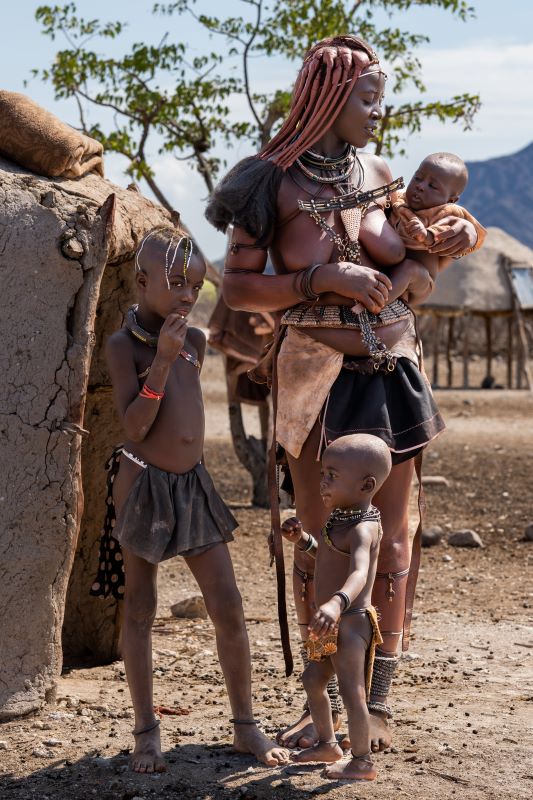
The hairstyles of Himba women change throughout their lives. Young girls wear two braids pointing forward when they are children, then directed backward when they are of marriageable age. Once they become wives, the hairstyle evolves further: Himba women then style their hair into long braids, which they coat with clay.
For boys, the rituals are also strict. They must have their heads shaved until circumcision, and after this ceremony, they style their hair into a large horn-shaped braid. Himba people are very mindful of beauty and have many beauty rituals. Women never wash with water; instead, they use fumigations made from fragrant bark as a replacement for daily bathing. They also coat their bodies with a balm made of red earth and butter, which makes them extraordinarily beautiful women. Their skin is thus supple and hydrated.
Sacred rituals that endure in Namibia
The Himba people live simply, in campsites located around their livestock. This population always keeps a fire burning, establishing the essential connection between the world of the living and that of the dead.
In Himba culture, women have a deep desire: “To be as resilient and beautiful as a red cow.” This is the ultimate dream of this people, who tend to coat themselves with a mixture of earth and butter to hydrate and protect themselves from the sun and insect bites.
People Ovambo, predominantly Namibian people
The Ovambo people constitute the majority in Namibia, representing half of the country’s population. Inhabitants primarily reside in the northern regions, near the Kunene River. The Ovambo sustain themselves mainly through agriculture and cattle herding. Today, many Ovambos adhere to Christianity, yet they also believe in a supreme spirit known as Kalunga. The Ovambo community is led by a chief, who is appointed from a royal lineage.
The languages of the peoples of Namibia
In Namibia, a multitude of languages flourishes, varying from one ethnic group to another. This linguistic diversity is a reflection of the country’s rich history and culture. Although English is the official language of Namibia, it is spoken by very few inhabitants. Each community employs its own dialect, with Oshiwambo being the most widely spoken language, utilized by half of the population. Nama is another language predominantly spoken in Namibia. Numerous Bantu languages are also present, alongside Germanic and African tongues.
Namibia, enriched by its cultural diversity and the authenticity of its peoples, is a land teeming with wonders. During your journey, do not hesitate to visit one of the many villages nestled in the desert, where you can encounter a unique population with ancestral customs.