

[slim_seo_breadcrumbs label_home=”Matakwa Safaris”]
The desert wind, the endless horizon, extraordinary and delicate wildlife, ancient peoples – this is Namibia!
Are you a passionate traveler seeking an unforgettable and authentic African experience?
Namibia, with its iconic landscapes and cultural diversity, offers a destination of unexpected wonders.
Enter a world still undiscovered, brimming with treasures to uncover, far from mass tourism.
We organize your exceptional guided tour.
Namibia Travel: The Namib Desert

The Namib, also known as the Great Void, is the oldest desert in the world.
It stretches for 2,000 kilometers along the Atlantic Ocean on the famous Skeleton Coast, enduring arid conditions for nearly 55 million years.
The coastal desert of Namib is one of the must-visit places in Namibia.
Between dunes and clayey lands, far from the paths of mass tourism, in this preserved, fascinating, and mysterious world, you will experience a timeless moment here.
We organize a tour for you to discover incredible landscapes where many animals have adapted to the arid conditions of the Namib Desert, in a unique and wild nature.
“Let yourself be captivated by an immersive and authentic visit to a country filled with incredible places and live an exceptional journey.”
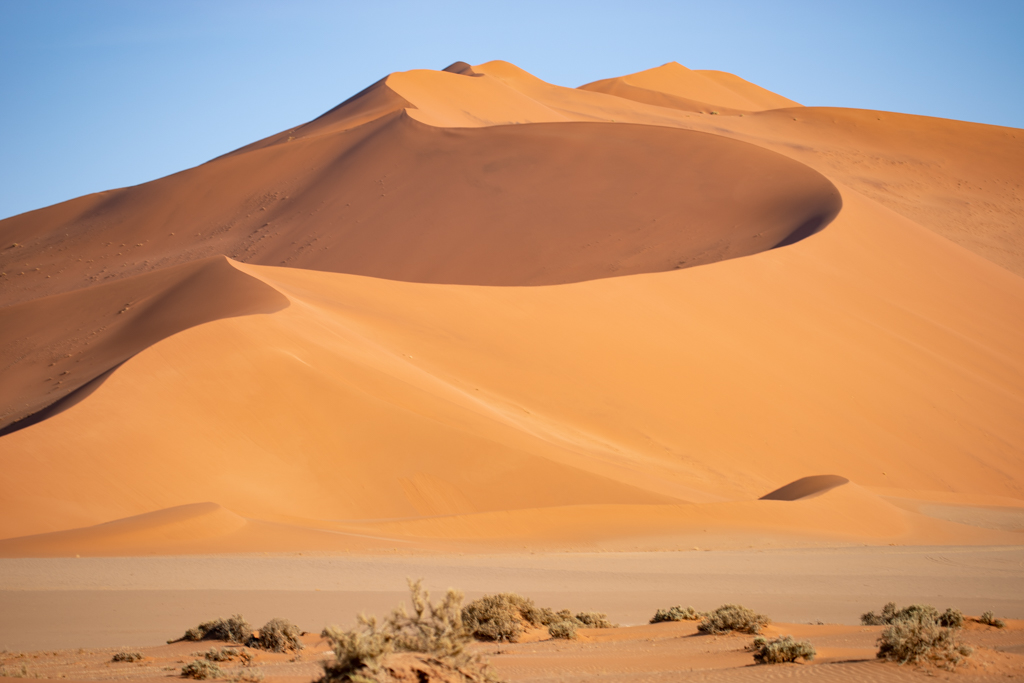
Particularly appreciated for its impressive sand dunes with orange hues, the Namib Desert has much to offer to expert or amateur photographers.
This region of the world is a fascinating destination, at the heart of an iconic national park. We can organize a hot air balloon flight or a helicopter tour for you: from above, the desert resembles an ocean of rolling orange-red waves.
Let us organize your African adventure to discover all the corners and main points of interest of this extraordinary country that is Namibia.
Visit to the national park: Namib-Naukluft
Voted the most beautiful national park in the world by Lonely Planet, covering an area of 49,768 —larger than Switzerland—the Namib National Park, located in the Naukluft Mountains, is the largest park in Africa and the fourth largest in the world. The powerful winds that blow through this region have sculpted the desert, creating dunes that can reach heights of 300 meters, while the landscape is characterized by isolated mountains of red granite. Numerous animal species thrive in this particularly arid region, including geckos, hyenas, oryx, mountain zebras, springboks, cheetahs, leopards, and many others.
“The Namib is considered the perfect desert.”
Sossusvlei
The term Sossusvlei does not refer to a specific place, but to the entire area stretching from Sesriem to the heart of the Namib-Naukluft National Park where Deadvlei is located.
The dunes of Sossusvlei are also known as star dunes, due to the wind shaping them in all directions. The sand dunes of the Namib are dynamic and change shape with the wind.
This iconic location is home to Big Daddy and Dune 45. Admire the orange dunes: once climbed, you will discover stunning viewpoints from the highest dunes in the world.
Deadvlei
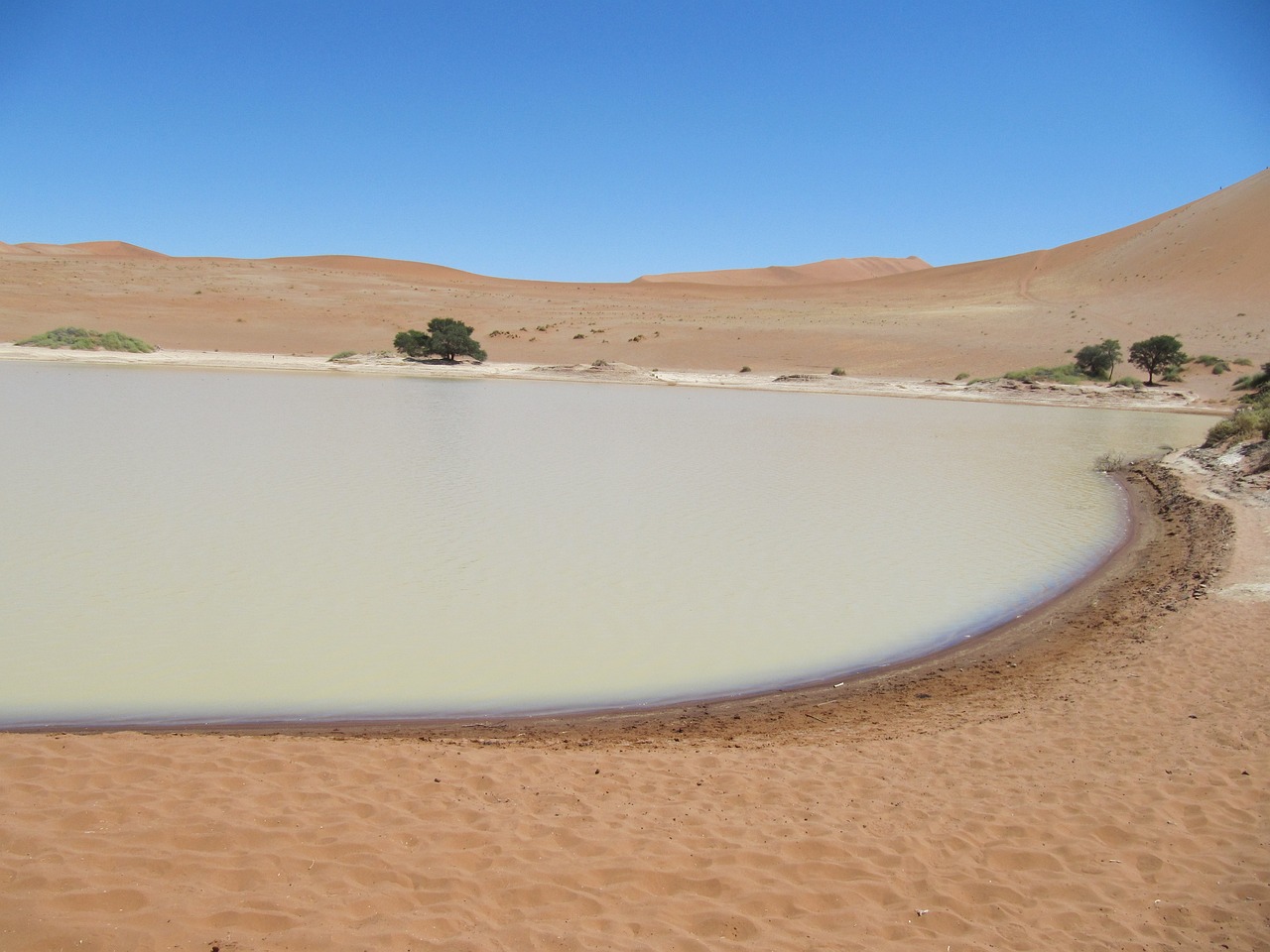
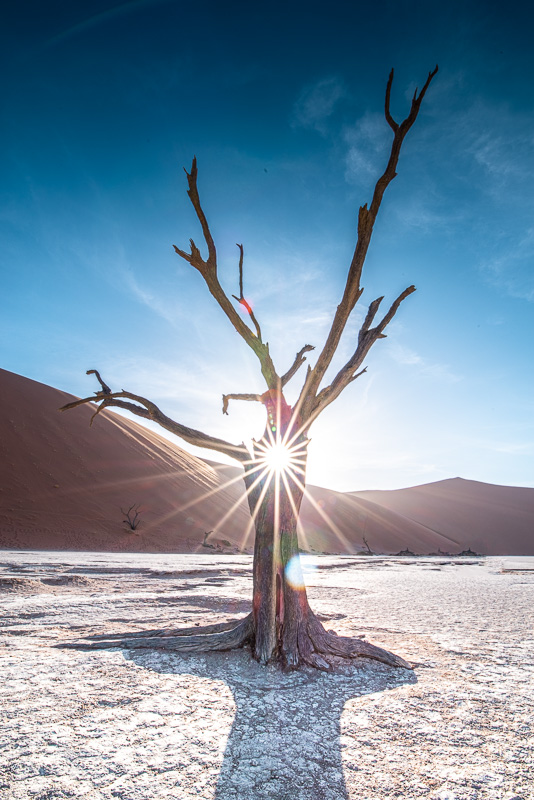
This clay pan, also known as the Devil’s Cauldron, formed by the overflow of a river where the trees frozen in time make this place a true postcard landscape, almost unreal.
The creation of Deadvlei dates back 900 years, when the Tsauchab River overflowed, allowing many acacia trees to grow. Over the years, sand dunes surrounded the area, preventing the river from reaching the trees. Drought thus caused the death of all the acacias on the site, giving the landscape an astonishingly apocalyptic atmosphere.
Due to its Salvador Dali-like landscapes, Deadvlei is one of the most photographed places in Africa.
Deadvlei, which translates to “dead marsh” in Afrikaans and “dead” in English, located in the largest conservation area in Africa, this unique place in the world is a must-see during your stay in Namibia.
How to get to the Namib Desert?
The guided tour.
Located several hundred kilometers from Windhoek, the capital of Namibia, the Namib Desert – an area of 80 000 km² – is rather difficult to access.
This place is best visited aboard a 4×4 vehicle prepared for the desert. For a safe exploration of the country, opt for a guided safari, embark on a journey through the oldest desert in the world, and traverse the dunes to discover a unique and magnificent landscape.